Book Club

Greater Milford Area History Readers

Book Club Meetings

We meet on the first Tuesday of the month at 7pm at Promont House, 906 Main St. Milford.

Join us!

Contact us at : promonthouse4@gmail.com

Upcoming Books

Book Matters is giving 20% on these books to club members – discount code “Promont”

link here 

January

Finding Margaret Fuller

 by Allison Partake 

January 6

In the company of Ralph Waldo Emerson and his circle of enlightened friends, the young, beautiful, and brilliant Margaret Fuller becomes “the radiant genius and fiery heart” of the Transcendentalists. She inspires Louisa May Alcott, sparks Nathaniel Hawthorne to create Hester Prynne, and forms close bonds with Henry David Thoreau and Emerson himself. However, Margaret’s soul yearns for more than poetry and drama, leading her on a journey of adventure and self-discovery.

From hosting a women-only literary salon in Boston to becoming the first woman permitted entry to Harvard’s library, Margaret defies societal conventions as an activist for women’s rights and a champion for humanity. On the gritty New York streets, she spars with Edgar Allan Poe and reports on the work of Frederick Douglass. And when offered an assignment in Europe by editor Horace Greeley, Margaret becomes the first female foreign news correspondent, mingling with the likes of Frédéric Chopin, William Wordsworth, and George Sand. In Rome, she embarks on a passionate love affair with a Roman count, causing an international scandal. As a mother and a countess, Margaret enters a new fight for Italy’s unification.

With a star-studded cast and an epic sweep of historical events, this is a story of an inspiring trailblazer, a woman who loved big and lived even bigger—a fierce adventurer who transcended the rigid roles ascribed to women and changed history for millions, all on her own terms.

February

First Ladies

by Marie Benedict & Victoria C. Murray

February 3 

The daughter of formerly enslaved parents, Mary McLeod Bethune refuses to back down as white supremacists attempt to thwart her work. She marches on as an activist and an educator, and as her reputation grows she becomes a celebrity, revered by titans of business and recognized by U.S. Presidents. Eleanor Roosevelt herself is awestruck and eager to make her acquaintance. Initially drawn together because of their shared belief in women’s rights and the power of education, Mary and Eleanor become fast friends confiding their secrets, hopes and dreams—and holding each other’s hands through tragedy and triumph.
 
When Franklin Delano Roosevelt is elected president, the two women begin to collaborate more closely, particularly as Eleanor moves toward her own agenda separate from FDR, a consequence of the devastating discovery of her husband’s secret love affair. Eleanor becomes a controversial First Lady for her outspokenness, particularly on civil rights. And when she receives threats because of her strong ties to Mary, it only fuels the women’s desire to fight together for justice and equality.
 
This is the story of two different, yet equally formidable, passionate, and committed women, and the way in which their singular friendship helped form the foundation for the modern civil rights movement.

March

The Invincible Miss Cust

by Penny Haw

March 3

Aleen Cust has big dreams. And no one―not her family, society, or the law―will stop her.

Born in Ireland in 1868 to an aristocratic English family, Aleen knows she is destined to work with animals, even if her family is appalled by the idea of a woman pursuing a veterinary career. Going against their wishes but with the encouragement of the guardian assigned to her upon her father’s death, Aleen attends the New Veterinary College in Edinburgh, enrolling as A. I. Custance to spare her family the humiliation they fear. At last, she is on her way to becoming a veterinary surgeon! Little does she know her biggest obstacles lie ahead.

The Invincible Miss Cust is based on the real life of Aleen Isabel Cust, who defied her family and society to become Britain and Ireland’s first woman veterinary surgeon. Through Penny Haw’s meticulous research, riveting storytelling, and elegant prose, Aleen’s story of ambition, determination, family, friendship, and passion comes to life. It is a story that, even today, women will recognize, of battling patriarchy and an unequal society to realize one’s dreams and pave the way for other women in the face of seemingly insurmountable odds.

April

Emily’s House

by Amy Belding Brown

April 7

Massachusetts, 1869. Margaret Maher has never been one to settle down. At twenty-seven, she’s never met a man who has tempted her enough to relinquish her independence to a matrimonial fate, and she hasn’t stayed in one place for long since her family fled the potato famine a decade ago.

When Maggie accepts a temporary position at the illustrious Dickinson family home in Amherst, it’s only to save money for her upcoming trip West to join her brothers in California. Maggie never imagines she will form a life-altering friendship with the eccentric, brilliant Miss Emily or that she’ll stay at the Homestead for the next thirty years.

In this richly drawn novel, Amy Belding Brown explores what it is to be an outsider looking in, and she sheds light on one of Dickinson’s closest confidantes—perhaps the person who knew the mysterious poet best—whose quiet act changed history and continues to influence literature to this very day.

May

The Stolen Life of Collette Maceau

by Kristin Carmel

May 5

Colette Marceau has been stealing jewels for nearly as long as she can remember, following the centuries-old code of honor instilled in her by her mother, Annabel: take only from the cruel and unkind, and give to those in need. Never was their family tradition more important than seven decades earlier, during the Second World War, when Annabel and Colette worked side by side in Paris to fund the French Resistance.

But one night in 1942, it all went wrong. Annabel was arrested by the Germans, and Colette’s four-year-old sister, Liliane, disappeared in the chaos of the raid, along with an exquisite diamond bracelet sewn into the hem of her nightgown for safekeeping. Soon after, Annabel was executed, and Liliane’s body was found floating in the Seine—but the bracelet was nowhere to be found.

Seventy years later, Colette—who has “redistributed” $30 million in jewels over the decades to fund many worthy organizations—has done her best to put her tragic past behind her, but her life begins to unravel when the long-missing bracelet suddenly turns up in a museum exhibit in Boston. If Colette can discover where it has been all this time—and who owns it now—she may finally learn the truth about what happened to her sister. But she isn’t the only one for whom the bracelet holds answers, and when someone from her childhood lays claim to the diamonds, she’s forced to confront the ghosts of her past as never before. Against all odds, there may still be a chance to bring a murderer to justice—but first, Colette will have to summon the courage to open her own battered heart.

June

The Queens of Crime

by Marie Benedict

June 2

London, 1930. The five greatest women crime writers have banded together to form a secret society with a single goal: to show they are no longer willing to be treated as second class citizens by their male counterparts in the legendary Detection Club. Led by the formidable Dorothy L. Sayers, the group includes Agatha Christie, Ngaio Marsh, Margery Allingham and Baroness Emma Orczy. They call themselves the Queens of Crime. Their plan? Solve an actual murder, that of a young woman found strangled in a park in France who may have connections leading to the highest levels of the British establishment.

May Daniels, a young English nurse on an excursion to France with her friend, seemed to vanish into thin air as they prepared to board a ferry home. Months later, her body is found in the nearby woods. The murder has all the hallmarks of a locked room mystery for which these authors are famous: how did her killer manage to sneak her body out of a crowded train station without anyone noticing? If, as the police believe, the cause of death is manual strangulation, why is there is an extraordinary amount of blood at the crime scene? What is the meaning of a heartbreaking secret letter seeming to implicate an unnamed paramour? Determined to solve the highly publicized murder, the Queens of Crime embark on their own investigation, discovering they’re stronger together. But soon the killer targets Dorothy Sayers herself, threatening to expose a dark secret in her past that she would do anything to keep hidden.

Inspired by a true story in Sayers’ own life, New York Times bestselling author Marie Benedict brings to life the lengths to which five talented women writers will go to be taken seriously in the male-dominated world of letters as they unpuzzle a mystery torn from the pages of their own novels.

July

Leaving Coy’s Hill

by Katherine A. Sherbrooke

July 7

Born on a farm in 1818, Lucy Stone dreamt of extraordinary things for a girl of her time, like continuing her education beyond the eighth grade and working for the abolitionist cause, and of ordinary things, such as raising a family of her own. But when she learns that the Constitution affords no rights to married women, she declares that she will never marry and dedicates her life to fighting for change.

At a time when it is considered promiscuous for women to speak in public, Lucy risks everything for the anti-slavery movement, her powerful oratory mesmerizing even her most ardent detractors as she rapidly becomes a household name. And when she begins to lecture on the “woman question,” she inspires a young Susan B. Anthony to join the movement. But life as a crusader is a lonely one.

When Henry Blackwell, a dashing and forward-thinking man, proposes a marriage of equals, Lucy must reconcile her desire for love and children with her public persona and the legal perils of marriage she has long railed against. And when a wrenching controversy pits Stone and Anthony against each other, Lucy makes a decision that will impact her legacy forever.

Based on true events, Leaving Coy’s Hill is a timeless story of women’s quest for personal and professional fulfillment within society’s stubborn constraints. And as an abolitionist and women’s rights activist fighting for the future of a deeply divided country, Lucy Stone’s quest to live a life on her own terms is as relevant as ever. In this “propulsive,” “astonishing,” and “powerful” story, Katherine Sherbrooke brings to life a true American heroine for a new generation.

August

The Professor and the Madam 

by Simon Winchester

August 4

When the editors of the Oxford English Dictionary put out a call during the late 19th century pleading for “men of letters” to provide help with their mammoth undertaking, hundreds of responses came forth. Some helpers, like Dr. W.C. Minor, provided literally thousands of entries to the editors. But Minor, an American expatriate in England and a Civil War veteran, was actually a certified lunatic who turned in his dictionary entries from the Broadmoor Criminal Lunatic Asylum. Simon Winchester has produced a mesmerizing coda to the deeply troubled Minor’s life, a life that in one sense began with the senseless murder of an innocent British brewery worker that the deluded Minor believed was an assassin sent by one of his numerous “enemies.”

Winchester also paints a rich portrait of the OED’s leading light, Professor James Murray, who spent more than 40 years of his life on a project he would not see completed in his lifetime. Winchester traces the origins of the drive to create a “Big Dictionary” down through Murray and far back into the past; the result is a fascinating compact history of the English language (albeit admittedly more interesting to linguistics enthusiasts than historians or true crime buffs). That Murray and Minor, whose lives took such wildly disparate turns yet were united in their fierce love of language, were able to view one another as peers and foster a warm friendship is just one of the delicately turned subplots of this compelling book.

September

The Small and the Mighty 

by Sharon McMahon

September 1

In The Small and the Mighty, Sharon McMahon proves that the most remarkable Americans are often ordinary people who didn’t make it into the textbooks. Not the presidents, but the telephone operators. Not the aristocrats, but the schoolteachers. Through meticulous research, she discovers history’s unsung characters and brings their rich, riveting stories to light for the first time.

You’ll meet a woman astride a white horse riding down Pennsylvania Ave, a young boy detained at a Japanese incarceration camp, a formerly enslaved woman on a mission to reunite with her daughter, a poet on a train, and a teacher who learns to work with her enemies. More than one thing is bombed, and multiple people surprisingly become rich. Some rich with money, and some wealthy with things that matter more.

This is a book about what really made America – and Americans – great. McMahon’s cast of improbable champions will become familiar friends, lighting the path we journey in our quest to make the world more just, peaceful, good, and free.

October

The Frozen River 

by Ariel Lawson

October 6

Maine, 1789: When the Kennebec River freezes, entombing a man in the ice, Martha Ballard is summoned to examine the body and determine cause of death. As a midwife and healer, she is privy to much of what goes on behind closed doors in Hallowell. Her diary is a record of every birth and death, crime and debacle that unfolds in the close-knit community. Months earlier, Martha documented the details of an alleged rape committed by two of the town’s most respected gentlemen—one of whom has now been found dead in the ice. But when a local physician undermines her conclusion, declaring the death to be an accident, Martha is forced to investigate the shocking murder on her own.

Over the course of one winter, as the trial nears, and whispers and prejudices mount, Martha doggedly pursues the truth. Her diary soon lands at the center of the scandal, implicating those she loves, and compelling Martha to decide where her own loyalties lie.

Clever, layered, and subversive, Ariel Lawhon’s newest offering introduces an unsung heroine who refused to accept anything less than justice at a time when women were considered best seen and not heard. The Frozen River is a thrilling, tense, and tender story about a remarkable woman who left an unparalleled legacy yet remains nearly forgotten to this day.

November

Medicine River

by Mary Annette Pember

November 3

From the mid-nineteenth century to the late 1930s, tens of thousands of Native children were pulled from their tribal communities to attend boarding schools whose stated aim was to “save the Indian” by way of assimilation. In reality, these boarding schools—sponsored by the U.S. government, but often run by various religious orders with little to no regulation—were a calculated attempt to dismantle tribes by pulling apart Native families. Children were beaten for speaking their Native languages; denied food, clothing, and comfort; and forced to work menial jobs in terrible conditions, all while utterly deprived of love and affection.

Amongst those thousands of children was Ojibwe journalist Mary Pember’s mother, who was was sent to a boarding school in northern Wisconsin at age five. The trauma of her experience cast a pall over Pember’s own childhood and her relationship with her mother. Highlighting both her mother’s experience and the experiences of countless other students at such schools, their families, and their children, Medicine River paints a stark but hopeful portrait of communities still reckoning with the trauma of acculturation, religion, and abuse caused by the state. Through searing interviews and careful reporting, Pember traces the evolution and continued rebirth of Native cultures and nations in relation to the country that has been intent on eradicating them.

December

Theo of Golden 

by Allen Levi

December 1

Questions linger about Theo, a pleasant but mysterious stranger, after his arrival in the southern city of Golden.

Who is he, and why is he here?

He arrives early one spring and by chance — or is it? — he visits a coffee shop where 92 framed pencil portraits are on display. Inspired, Theo sets out on a mission of purchasing all the portraits one at a time and quietly bestowing them on their ‘rightful owners.’

Stories are told; friendships are born; and lives are changed.

Theo of Golden is a beautifully crafted story about the power of creative generosity, the importance of wonder to a purposeful life, and the far-reaching possibilities of anonymous kindness.
PROMONT HOUSE

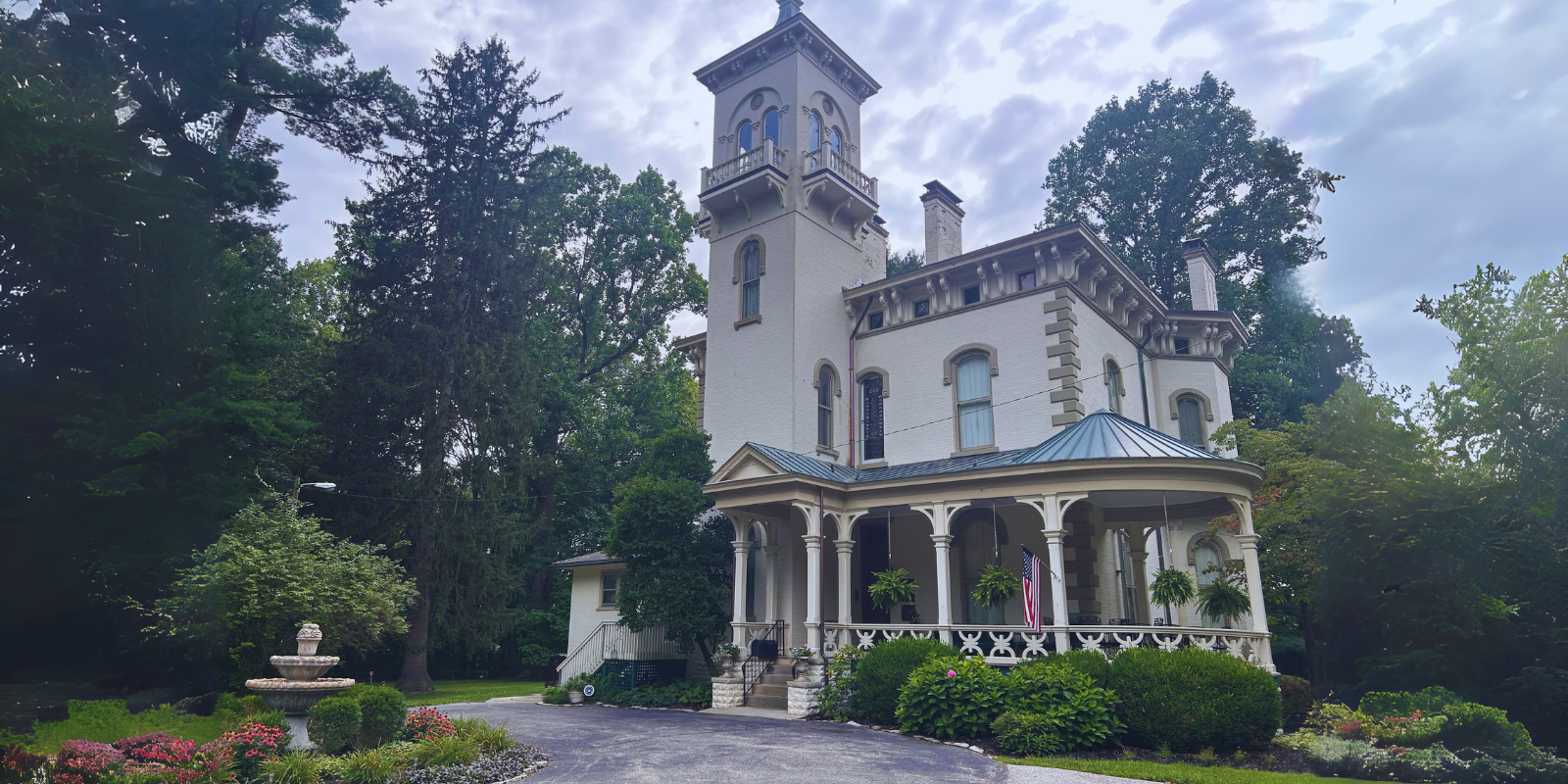
Greater Milford Area  History Readers meet at the Promont House.

906 Main St, Milford, Oh 45150